
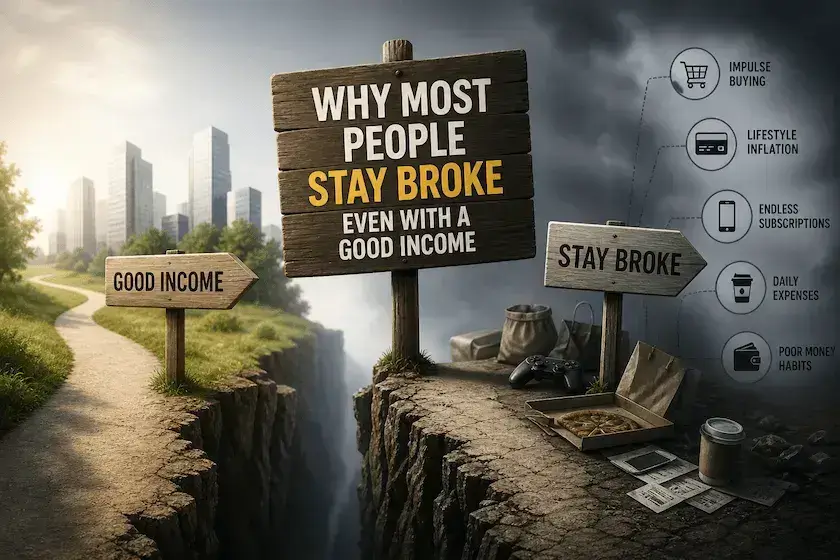
Earning more money should solve financial problems.
But for a lot of people, it doesn’t.
You’ll see individuals with decent—even high—incomes still living paycheck to paycheck, carrying debt, and feeling constant financial pressure. It’s not always about how much they make. It’s about how money is managed once it comes in.
Lifestyle Expands Faster Than Income
This is one of the most common patterns.
As income increases, spending quietly rises with it. Better phone, better car, better rent, more eating out—it all feels justified because “you can afford it now.”
The problem is, nothing is left over.
Instead of creating financial progress, a higher income just upgrades the lifestyle. The gap between earning and saving never really grows.
No Clear System for Money
A lot of people don’t actually have a system for managing their money.
There’s no structure—just spending, saving whatever is left (if anything), and repeating the cycle next month.
Without a system, it’s easy to lose track of:
- Where money is going
- How much should be saved
- What goals are being worked toward
It’s not about being strict. It’s about being intentional.
Depending Too Much on Future Income
There’s often an assumption that things will improve later.
“I’ll save more next year.”
“I’ll invest when I earn more.”
But income alone doesn’t fix habits.
If money isn’t being managed well now, a higher income usually just scales the same behavior. The pattern continues—just with bigger numbers.
Debt Becomes Normal
Another issue is how normalized debt has become.
Credit cards, EMIs, buy-now-pay-later—it’s all designed to make spending easier in the moment.
Over time, these small commitments add up and start eating into future income. That’s when people feel stuck, even with a good salary.
They’re earning well—but a big portion is already spoken for.
Saving Feels Like a Leftover Activity
For many, saving isn’t planned—it’s whatever remains after spending.
And most of the time, that leftover is small or nonexistent.
The shift happens when saving becomes a priority instead of an afterthought. Even a modest, consistent approach works better than occasional large efforts.
Short-Term Thinking Dominates Decisions
A lot of financial decisions are made based on immediate comfort rather than long-term benefit.
Buying something now feels good. Saving or investing requires patience.
That’s why it’s easy to delay the “responsible” choices. But over time, those delays compound just as much as good decisions would.
What Actually Changes the Situation
It’s not about cutting everything or living extremely frugally.
The real change comes from a few simple shifts:
- Spending with awareness instead of impulse
- Saving first, not last
- Keeping lifestyle growth slower than income growth
None of this is complicated—but it does require consistency.
Having a good income is an advantage, but it’s not a guarantee.
Without control, structure, and some level of discipline, money passes through quickly—no matter how much comes in.